
Quick Summary: What to Know About Construction Accidents
- Filing deadlines vary by state, and public projects often have much shorter notice requirements.
- Proving liability means showing someone owed you a duty of care and failed to meet it.
- Claims can cover bills, lost wages, reduced earning capacity, and pain and suffering.
- The strongest evidence usually includes OSHA records, maintenance logs, safety training files, and site inspection reports.
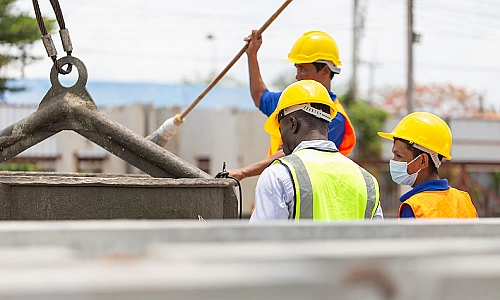
A carpenter walks the second-floor deck he has walked every morning for three weeks. Sometime the day before, another crew pulled a section of guardrail to move material through, and nobody put it back. He steps toward the edge to check a measurement, and in the space of a second his job, his income, and his family’s routine all change.
Nothing about that morning was unusual. That is what makes construction work different from most other jobs. Multiple companies share one site, the layout changes daily, and a shortcut taken by a crew you have never met can put you in an emergency room.
If you are reading this after your accident or trying to figure out what happened to someone in your family you are probably finding that the medical questions get answered long before the legal ones do. These cases are truly difficult and knowing why is the first step, toward dealing with one.
Common Causes of Construction Site Accidents
Construction accidents can occur in a variety of ways. Typically there are several causes for accidents such as:
- Falls from heights: When a worker falls from a roof, from a ladder, or from an unprotected edge.
- Scaffolding collapses: Collapses occur for reasons including improper assembly, missing base plates, and excessive weight placed upon scaffolds.
- Struck-by accidents: Falling objects, swinging loads, and even reversing vehicles can all cause serious injury.
- Electrocutions: Injuries caused by contact with overhead power lines, improper wiring of equipment, or damaged electrical cords and cables.
- Crushed or pinned injuries: Workers can be crushed or pinned by heavy equipment, machinery, falling materials, or trench collapses.
- Hazardous material exposure: Workers are threatened by silica dust, asbestos, and other hazardous materials often causing serious health effects, many of which take years or even decades to surface.
Further, there were 1,034 construction fatalities in 2024, with 389 of those being fatal falls to a lower level. You can learn more about construction workplace safety and fall prevention resources from OSHA.
What to Do After a Construction Site Accident
Report the injury to your employer in writing as soon as possible. Get treatment even if you think you are okay. If safe, photograph the scene, equipment, and your injuries. Write down names of witnesses, including workers from other companies.
Avoid early mistakes: Do not give a recorded statement to an insurance adjuster before you understand your injuries. Additionally, friendly answers like “I’m doing okay” can later be used to show your injuries were minor.
How to Prove Construction Site Negligence
Negligence claims generally require showing that someone had a duty of care, breached that duty, caused the injury, and that the injured worker suffered damages.
- Falls and fall protection: Missing guardrails, improper fall protection, or inadequate training may support a negligence claim. Safety plans, inspection records, training records, and OSHA citations can help show what went wrong.
- Scaffolding collapse: Review setup records, inspections, and reports of problems before the collapse.
- Electrocutions: Look at lockout/tagout records, utility records, and other evidence showing whether circuits or power lines were properly secured.
- Struck-by and caught-in accidents: Evidence may include exclusion zones, spotters, trench protections, site logs, and job hazard analyses.
- Equipment failures: These claims may involve the manufacturer if the equipment had a defect or warning failure. Maintenance and repair records can help, but the failed equipment itself may be the most important evidence.
The CDC’s construction safety resources provide information on workplace hazards and prevention.
How Fault Is Determined in a Construction Accident Liability Claim
General contractors typically control the overall site and safety program. Subcontractors are responsible for their own crews and work areas. Depending on the circumstances, an injured worker may also have premises liability claims against a property owner for unsafe conditions. Equipment manufacturers and rental companies come in when a machine fails.
Attorneys request contracts between every company, certificates of insurance, daily field reports, sign-in sheets, and safety programs. Some states bar recovery entirely once an injured person is found 50 percent or more at fault. Others reduce the award by the injured person’s percentage no matter how high it runs.
Workers’ Compensation and Third-Party Claims Are Two Different Paths
Workers’ comp pays regardless of fault, covering medical care and part of lost wages. It is administrative, and you generally cannot sue your employer. Injured workers access these workplace injury benefits through the employer’s insurer soon after reporting.
A third-party claim is separate: a negligence claim against someone other than your employer, filed alongside the comp claim.
Comp doesn’t pay pain and suffering and replaces only part of lost wages. A third-party claim can reach full damages, including non-economic harm. Pursuing both requires coordination, because the comp insurer usually has a right to repayment from a third-party recovery, and the lien affects what you keep.
How Insurance Carriers Approach These Claims
Construction cases often involve several carriers, each insuring a different company and blaming others. The process usually starts with a demand letter outlining liability and losses.
Carriers respond low, then negotiation follows. Documentation is the counterweight: citations, inspection logs, and medical records linking your limitations to the incident narrow the room for argument.
Evidence That Can Help Prove Construction Site Negligence
The records that carry the most weight include:
- OSHA inspection reports and citations
- Equipment maintenance and inspection records
- Safety training records and sign-in sheets
- Job hazard analyses and site inspection documentation
- Photographs and video of the scene
- Witness statements gathered while memories are fresh
- Complete medical records from the initial visit through follow-up care
An OSHA citation looks great in your file, but it doesn’t automatically mean you win your case. Courts treat it as evidence of unsafe behavior, not a final verdict. An investigation should go beyond the citation itself.
The Damages a Construction Injury Claim May Cover
Economic damages are the losses with a number attached. Medical treatment, surgeries, rehabilitation, lost wages, and reduced future earning capacity all belong here. For construction workers, the most significant loss is often the reduction in future earning capacity because an injury can end a trade someone spent years learning.
Non-economic damages cover physical pain, emotional distress, and the loss of ordinary activities. Punitive damages are reserved for conduct that goes beyond carelessness and are not available in most cases.
When Working With a Construction Site Accident Lawyer Makes Sense
Most individuals don’t need legal representation for minor injuries but require an attorney for more serious injuries that occur on sites with multiple employers, failed equipment, disputed injuries by employer or insurer, and unclear safety responsibility.
They can help identify and keep track of all parties potentially responsible for the incident and retain evidence such as video prior to it being destroyed, review and use evidence against you from your contract with your employer to gather evidence of safety rules and policies.
They can also coordinate your workers’ compensation claim with your third-party claim, negotiate the workers’ compensation lien, hire experts to establish your earning capacity, and deal with the insurance adjuster for you.
Construction Site Accident FAQ
How long do I have to file a lawsuit after a construction site accident?
There is rarely just one clock. The deadline for a negligence lawsuit is set by state law, but a workers’ compensation claim carries a much shorter reporting requirement. If the project involves a government entity, formal notice may be due within months. Injuries that develop over time may have different timing rules.
Can I file a personal injury claim if I am already receiving workers’ compensation benefits?
Often yes, as long as the claim targets someone other than your employer. The threshold question is who legally counts as your employer, which on a construction site is less obvious than it sounds.
Your comp insurer will likely assert a right to reimbursement from any third-party recovery.
Who can be held liable if I was injured by defective equipment or unsafe site conditions?
Responsibility usually follows control, and with equipment it follows the chain of distribution. A manufacturer may be liable for a dangerous design, while a rental company or maintenance contractor may be liable for a machine that left their hands in poor condition.
For site conditions, the analysis looks at who created the hazard and who had authority to fix it.
Talk Through Your Situation With Singh Ahluwalia Attorneys at Law
Construction claims have moving parts compared to most injury cases. Construction claims rely heavily on who was on the construction site, which records still exist, and how the state handles shared fault. If you have questions about a construction site accident, our team is happy to talk them through with you and help you understand the options in front of you.
Singh Ahluwalia Attorneys at Law works with injured people and their families. To arrange a consultation with a construction site injury attorney and discuss the specific facts of your situation, reach out to our team at (559) 878-4958.