Quick Summary: How Fault Is Determined After a Car Accident in California
- California personal injury claims generally must be filed within two years of the accident.
- California follows pure comparative negligence under Li v. Yellow Cab Co.
- Recoverable damages typically include medical expenses, lost wages, property damage, and compensation for pain and suffering.
- Police reports, photographs, witness statements, and medical records serve as primary evidence in establishing liability after a collision.

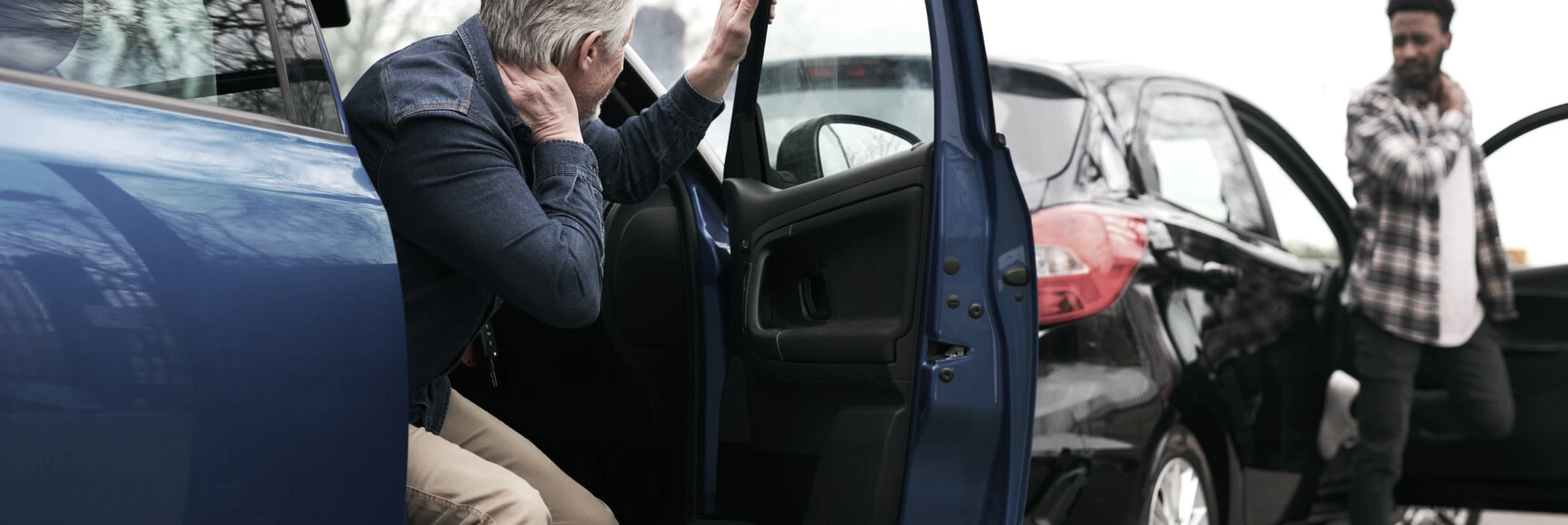
You’re stopped at a light on Shaw Avenue, waiting for the go sign, when the car behind you doesn’t slow down and bumped into your car. The impact is loud, your coffee is everywhere, and within ten minutes there are two drivers standing on the shoulder telling very different versions of the same thirty seconds. The other driver says you stopped short. You know you didn’t. Somewhere between those two stories, an insurance company is going to decide who pays.
Determining fault after a car accident isn’t about who sounds more convincing at the scene. It’s a process built on statutes, physical evidence, witness accounts, and the judgment calls an adjuster makes weeks later behind a desk.
At Singh Ahluwalia Attorneys at Law, our team handles California injury matters. The walkthrough below is meant to show you how that process actually unfolds so you can recognize where a claim gains or loses ground.
The Collisions That Most Often Raise Questions About Fault
Some crashes have an obvious answer and some do not, and the difference usually comes down to how many moving parts were involved. A few patterns show up over and over in California claims:
- Rear-end collisions: Often the most straightforward, though the trailing driver frequently argues the lead driver braked without reason or had broken brake lights.
- Left-turn crashes: A turning driver and an oncoming driver each insist they had the right of way, and the speed of the approaching car becomes the central dispute.
- Lane-change and sideswipe crashes: Two drivers drift toward the same space and the damage patterns on the vehicles often tell the story better than either driver does.
- Multi-vehicle pileups on freeways: On stretches of the 99 or the 41 during a foggy morning, fault can be split among four or five drivers, and each insurer has a reason to point at someone else.
Federal national crash data shows how routine these collisions are across the country, but the routine nature of a crash does not make blame obvious.
The First Moves After a Car Crash
What you do in the first hours after a crash often shapes what an adjuster believes months later.
Call law enforcement so there’s an official record. Photograph the vehicles before they get moved, along with debris, skid marks, traffic controls, and the surrounding roadway. Get names and numbers from anyone who saw what happened. Then get checked out by a doctor, even if you feel fine because of the adrenaline.
The mistakes are just as consistent. Giving a recorded statement to the other driver’s insurance adjuster before you’ve even collected your thoughts hands them a transcript they can quote back at you later. Waiting three weeks to see a doctor gives them an argument that your neck pain came from something else.
Also, posting about the crash on social media, even a photo of you smiling at a barbecue, can be repackaged as proof you weren’t really hurt. And accepting an early settlement offer closes your claim before anyone even knows what your treatment will actually cost.
There’s one more step that’s easy to miss. California requires drivers to file their own report with the DMV, separate from whatever the police wrote. The DMV’s accident reporting page explains how, and it’s worth doing so you don’t run into issues down the road.
Getting through a crash is hard enough without making things worse for yourself later. A little caution upfront can save you a lot of headaches when it comes time to sort everything out.
How the Comparative Negligence Works in Car Accident Cases Across California
California is a pure comparative negligence state. That means you can recover damages even if you were mostly at fault, but your award gets reduced by your own percentage of blame. Someone found ninety-nine percent at fault can still collect one percent of their losses.
The math is simple. Say a jury values your losses at $100,000 and assigns you thirty percent fault. Your recovery is $70,000. If you were seventy percent at fault, you get $30,000.
That’s why insurers rarely argue you were completely to blame. Instead, they argue you were twenty or thirty percent at fault. Shaving your share upward shrinks what they owe without ever denying the claim outright.
What a California Traffic Collision Report Does, and What It Does Not Do
After officers finish up at the scene, they put together a California traffic collision report. That’s the document with the diagrams, driver and witness statements, any citations issued, and the officer’s take on what they think caused the crash. Getting a copy is a smart first move, and the CHP has info on how to request one from the office that handled your crash.
Here’s what catches people off guard. The officer’s conclusion in that report is just an opinion, not a final ruling. They usually showed up after everything went down and had to piece it together from skid marks and whatever people told them.
The report doesn’t force an insurance company to do anything, and it generally doesn’t get used as evidence in a California trial, since it’s considered hearsay. The officer can testify about what they personally saw, but the report itself doesn’t just get handed to a jury.
Reporting to the DMV Within Ten Days
California has a reporting rule that has nothing to do with who caused the crash. Under Vehicle Code Section 16000, every driver involved in a collision that caused injury, death, or more than $1,000 in property damage has to file form SR-1 with the DMV within ten days. Miss it and you could lose your license.
Filing an SR-1 doesn’t replace what you need to tell your insurer, and it’s not a police report either. There’s also a separate rule that requires notifying law enforcement within twenty-four hours if someone was hurt or killed and no officer investigated at the scene.
How Insurance Carriers Investigate a Car Accident Insurance Claim
For insurance companies, figuring out fault is mostly a desk job. Once a claim gets opened, an adjuster is assigned and the investigation follows a pretty predictable path.
They’ll reach out to both drivers, request recorded statements, order the traffic collision report, inspect or photograph the vehicles, get your medical records through an authorization, and sometimes bring in an accident reconstruction expert if the damage patterns don’t match the stories.
Most carriers make an internal liability decision within a few weeks, though serious injury claims stay open a lot longer.
What the Adjuster is Listening For
Recorded statements are where claims quietly get damaged. The questions like, “How fast do you think you were going?” invites a guess that becomes a fact in your file. “Are you feeling better today?” gets a yes that’ll pop back up months later. “Did you see him before the impact?” sets up an argument that you could have avoided the crash.
How Blame Gets Shifted
Adjusters are always looking for anything that helps them assign you a percentage of fault. They’ll point to things like you stopping suddenly, being distracted, having a prior injury that explains your symptoms, or a gap in treatment that supposedly shows you recovered.
Countering those arguments is a big part of what a Fresno car accident attorney does before a demand package ever gets sent.
The Evidence Hierarchy: What Actually Carries Weight
When accounts conflict, some proof consistently outranks other proof. Insurers and juries tend to weigh it in roughly this order:
- Objective physical evidence: Damage patterns, crush depth, paint transfer, and final resting positions are hard to argue with.
- Video: Dashcam footage, a nearby business camera, or a doorbell camera can end a fault dispute in seconds.
- Independent witness statements: A bystander with no stake in the outcome is more persuasive than either driver.
- The police report: This is worth understanding in detail, and our discussion of how police reports affect fault goes further into it.
- Accident reconstruction and vehicle data: Event data recorders capture speed, braking, and throttle input in the seconds before impact, and a reconstruction engineer can translate that into a defensible account of what happened.
- Party statements: Useful, but discounted by everyone because both drivers have a reason to shade the story.
California Vehicle Code Violations and Negligence Per Se
Under Evidence Code Section 669, if someone violated a law and that violation caused the type of harm the law was meant to prevent, and the injured person was someone the law was designed to protect.
A few Vehicle Code sections come up all the time in real California crash cases:
- Section 21801: This section says that if you’re making a left turn, you have to yield to oncoming traffic that’s close enough to be a hazard.
- Section 21703: This section is the one that says you can’t follow another car more closely than is reasonable and prudent. That’s the backbone of most rear-end claims.
- Section 21658: This requires drivers to stay in their lane and only move over when it’s safe to do so.
- Section 22350: This is the basic speed law. It says you can’t drive faster than what’s safe for the conditions, even if you’re under the posted limit.
While it is possible to rebut negligence per se, establishing the presumption in the first place can shift the focus of subsequent conversations with the other party and require them to defend their actions.
The Damages That Fault Percentages Get Applied To
Fault percentages don’t just float around on their own. They get applied to a total, and that total is made up of different categories.
Economic damages cover the stuff with price tags. Medical treatment, future care, lost wages, reduced ability to earn money down the road, and the cost of fixing or replacing your vehicle. Non-economic damages cover things that don’t come with receipts. Physical pain, emotional distress, losing out on activities you used to enjoy.
Punitive damages are a whole different story. Under Civil Code Section 3294, you can only get those with clear and convincing evidence of oppression, fraud, or malice. That puts them way outside the reach of your average careless driving case.
Multiple defendants add another layer worth knowing about. Under Proposition 51, each at-fault party is only responsible for their own share of your non-economic damages. But for economic damages like medical bills and lost wages, liability can remain joint and several.
What that means in layman’s terms is that in a pileup where one driver has minimum coverage and another has a good policy, that distinction ends up shaping what you can actually recover way more than the raw percentages do. It’s not just about who’s at fault, it’s about who can actually pay.
When Legal Representation Helps, and What Follows
Not every claim needs a lawyer. But things change when injuries are serious, treatment stretches past a few weeks, more than two vehicles were involved, the insurance company assigns you a percentage of blame you don’t agree with, or a government vehicle or commercial truck is in the mix.
Once you seek legal help, the whole process shifts pretty quickly. Communication with the adjuster goes through the firm, so nobody’s asking you leading questions on a recorded line. Preservation letters go out for video footage before it gets overwritten. Witnesses get contacted while their memories are still fresh. Records and wage documentation get pulled together into a demand package, and settlement negotiations start from a documented position instead of a phone call.
California Drivers Car Accident Fault FAQ
How long do I have to file a car accident lawsuit in California?
Two years from the date of the crash is the general rule under Code of Civil Procedure Section 335.1. But that simple number hides some traps. If a city, county, state agency, or public transit vehicle is involved, Government Code Section 911.2 requires you to present a written claim to that entity within six months.
There’s also a special rule for kids. If the injured person is under eighteen, the clock doesn’t even start until their birthday.
Can I still recover damages if I was partially at fault for the accident?
Yes, California is way more forgiving on this than most states.
Here’s the thing people miss though. Your percentage of fault isn’t some fixed fact waiting to be discovered. It’s an argument. When an adjuster opens by telling you the file shows you’re forty percent responsible, what they’re really doing is stating a negotiating position. That number can move when evidence contradicts it.
In litigation, a jury ends up deciding the split after hearing both sides.
What role does the police report play in determining who caused the accident?
More than it should in the early months, and less than people expect at the end. Adjusters treat the responding officer’s opinion as a starting point because it’s the easiest evidence to grab. And if someone got a citation at the scene, that can anchor the whole liability decision.
But at trial? The report itself usually stays out because it’s considered hearsay.
Talk Through Your Situation With Singh Ahluwalia Attorneys at Law
Fault after a California crash gets decided by evidence, statutes, and the arguments each side makes about them, and no two collisions divide up the same way. If you have questions about who is likely to be held responsible for your accident, our team is glad to talk it through.
Singh Ahluwalia Attorneys at Law works with injured people across California. To arrange a consultation and discuss the specific facts of your case, reach out at (559) 878-4958.