Quick Summary: Proving Fault in a Truck Accident
- Truck accident claims often involve multiple parties and complex liability issues.
- Evidence like logs, reports, and data can help determine what happened.
- Insurance companies review multiple sources before deciding fault.
- Early evidence collection can affect how fault is evaluated.
- Understanding fault helps set expectations for how claims may proceed.
Need immediate help? Contact our office for guidance.

A truck crash can change your life in just a few seconds. One moment you are driving on a California highway, and the next you face serious injuries, mounting medical bills, and many hard questions. If you have ever wondered how to prove fault in a truck accident, you are not alone, and the answer is often more complex than people expect.
Truck accident cases differ from regular car crashes because they involve huge vehicles, strict rules, and several possible at-fault parties. Drivers across California, including busy commercial routes near Fresno, see these collisions on highways like Interstate 5 and Highway 99 every day. At Singh Ahluwalia Attorneys at Law, we help injured clients understand their rights and build strong cases backed by clear, reliable evidence.
How Fault Is Determined After a Truck Accident
Fault in a truck crash comes down to showing who acted carelessly and caused harm. The work of proving fault in truck accident claims starts with a careful liability assessment of every party involved. Investigators study the crash scene, the vehicles, and each driver’s actions to reach a clear determination of fault.
In California, how liability is determined in truck crash cases depends on the state’s comparative fault rule. Under comparative fault, more than one party can share blame for the same crash. This rule also affects recovery, since the money an injured person receives drops based on their share of fault.
Knowing who is at fault in truck accident cases takes more than a quick look at the damage. It requires evidence, expert review, and a full understanding of state and federal rules. That is exactly why early action matters so much after a serious wreck.
Why Truck Accidents Are More Complex Than Car Crashes
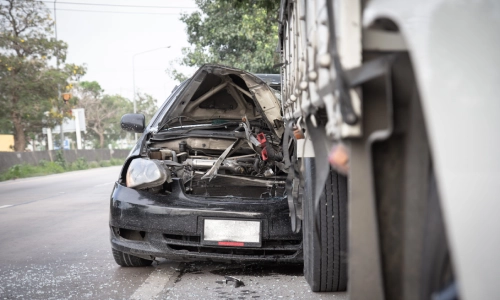
Large trucks behave very differently from passenger cars, which makes their crashes harder to study. A fully loaded big rig can weigh up to 80,000 pounds, so it needs far more room to stop and turn. This size and weight gap explains why truck crashes often cause severe harm and raise hard questions about fault.
Truck drivers and companies must also follow detailed trucking regulations set by federal and state agencies. These rules cover driving hours, vehicle upkeep, cargo loading, and driver training. A violation of any rule can indicate fault and affect how a claim proceeds.
These extra layers explain why truck claims often need professional help. A skilled California truck accident lawyer can review the rules, gather proof, and protect your interests. The right guidance helps level the field against large trucking firms and their insurers.
Types of Evidence Used to Prove Fault in Truck Accident Claims
Strong proof sits at the heart of every truck accident claim. The truck accident liability evidence you gather can decide whether your case succeeds or stalls. A handful of key sources provide the evidence needed for a truck accident claim success, and each one is explained below.
Black Box Data
A truck’s black box captures speed, braking, and throttle use in the seconds before a crash. This black box truck data accident record often gives objective proof about what the truck was doing. Investigators rely on it to confirm or challenge a driver’s account.
Driver Logs
Truckers must record their work and rest hours, and these logs reveal whether fatigue played a role. Driver logbooks serve as accident evidence and can show when a driver stayed on the road too long. The federal hours of service limits are strict, so missing or altered entries can point straight to fault.
Electronic Logging Devices
Most commercial trucks now track driving time automatically with an onboard device. The FMCSA’s ELD rule requires carriers to keep this data accurate and available. These digital records make it far harder for a driver to hide extra hours behind the wheel.
Maintenance Records
Trucks need regular upkeep, and a review of these service files can expose skipped repairs or worn brakes. Ignored safety checks often appear in the paperwork and reveal a pattern of neglect. When poor upkeep caused the crash, fault may shift toward the company rather than the driver.
Police Report
An officer who responds to the scene creates an official account of the crash. This document captures road conditions, early statements, and the parties involved. You can request the CHP traffic collision report and use it as a foundation for your claim.
Witness Statements
People who saw the crash can provide a neutral view of what happened. Clear accounts from bystanders add helpful detail and support your version of events. This independent input often carries real weight when the drivers disagree.
Accident Reconstruction
When the basic facts are in dispute, experts can rebuild the crash step by step. They use physics, photos, and vehicle data to show how the collision unfolded. This analysis can become powerful proof when each side tells a different story.
Together, these sources help build a complete and convincing picture of the fault. Each piece supports the others, so a single log entry or photo can confirm a larger pattern. The more proof you preserve, the stronger your position becomes.
The Role of Trucking Companies and Third Parties
Many people assume only the driver can be blamed for a crash, but truck cases work differently. Often, multiple parties that share fault in a truck accident may share responsibility for the collision. Identifying every liable party is a key step in learning how to prove fault in a truck accident claim.
Several parties may share blame, including:
- The truck driver: Careless driving, speeding, or distraction can place fault directly on the driver.
- The trucking company: Trucking company liability accident claims may arise from poor training, unrealistic schedules, or weak safety policies.
- Maintenance providers: A repair shop that did sloppy work may share blame for a mechanical failure.
- Cargo loaders: Workers who load freight incorrectly can cause shifting loads and rollovers.
- Parts makers: A defective tire, brake, or other part can make the manufacturer responsible.
Sorting out who is at fault in truck accident cases takes real skill and time. An experienced California personal injury attorney can identify each party and work to hold them accountable.
How Insurance Companies Decide Fault
Insurance companies play a major role in nearly every truck accident claim. Understanding how insurance determines fault in truck accident outcomes helps you set fair expectations. Each insurer reviews the available proof and tries to limit how much it must pay.
An insurance adjuster studies the crash report, photos, medical files, and recorded statements. The adjuster then assigns a share of blame to each party based on that review. Because adjusters work for the insurer, their first goal is to protect the company’s profits.
This is why injured people should stay careful when speaking with insurers. A calm, well-documented claim gives you a much stronger position. Solid proof makes it harder for an adjuster to shift blame onto you.
Why Documentation and Timing Matter
The strength of your claim often depends on how fast you act after a crash. The truck accident investigation process works best when evidence is fresh and complete. Quick evidence collection can preserve proof before it fades, gets lost, or is erased.
Trucking companies may repair vehicles or overwrite data soon after a collision. Meeting the truck accident claim proof requirements means gathering records, photos, and statements early. A prompt legal request can lock down logs and digital data before they disappear.
Local knowledge also helps when crashes happen on California roads. A dedicated Fresno truck accident lawyer understands regional routes and can move quickly. Fast action protects both your evidence and your right to fair compensation.
Proving Fault in a Truck Accident FAQ
How long do I have to file a truck accident claim in California?
In California, you generally have two years from the date of the crash to file a personal injury claim. Different deadlines can apply if a government vehicle was involved, so it is wise to act quickly. Early action also helps preserve the proof you need before it disappears.
What happens if the trucking company destroys or hides evidence?
Trucking companies sometimes repair vehicles or overwrite data soon after a crash. If a company destroys proof on purpose, a court may penalize it and may treat the missing evidence as a sign of fault. A prompt legal notice to preserve records helps protect your claim.
Do I need a lawyer to prove fault in a truck accident?
You are not required to hire one, but these cases are complex and involve powerful insurers. A lawyer can gather records, work with experts, and identify every party that may share fault.
Talk With a California Truck Accident Attorney
Proving fault after a truck crash is rarely simple, and the stakes for your recovery are high. Strong evidence and early action can shape the outcome of your entire claim. Understanding your rights now helps you make smart choices before important deadlines pass.
At Singh Ahluwalia Attorneys at Law, our team is ready to review your case and explain your options. Call us today at (559) 878-4958 to talk about what happened and how we can help. Take the first step toward protecting your rights and pursuing the compensation you deserve.