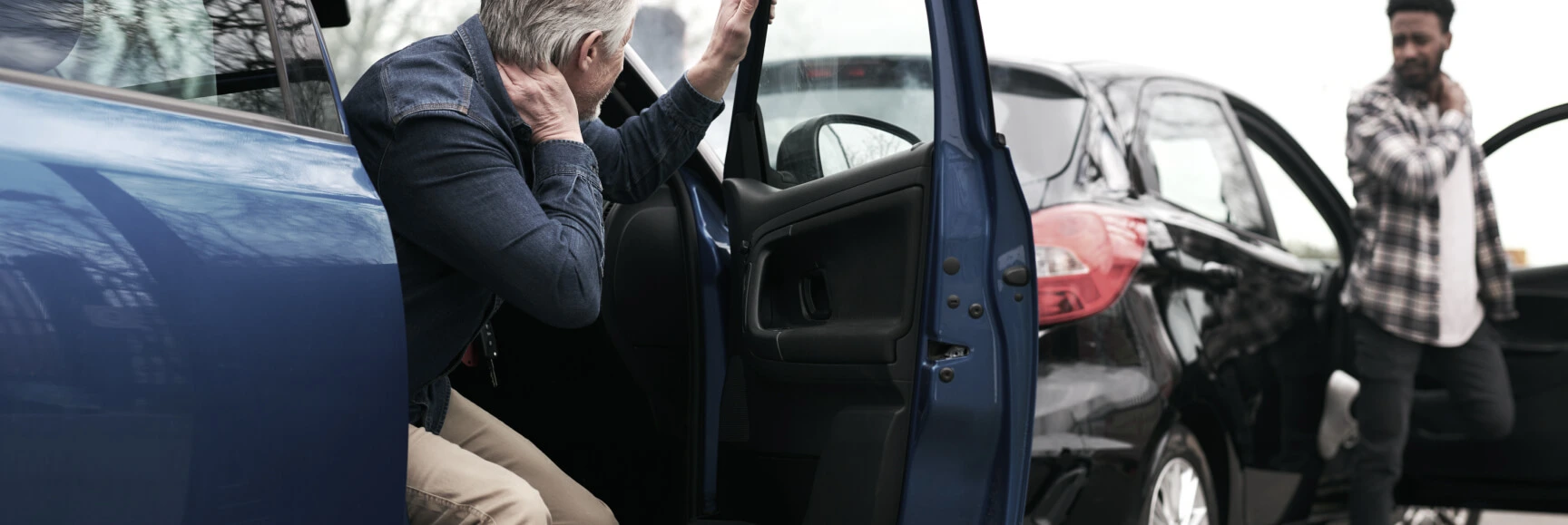
Key Points: Car Accident and Injury Claims in California
- California uses “pure comparative negligence” where compensation is reduced by fault in an accident.
- You generally have two years from the date of the accident to file a claim.
- California drivers must carry 30/60/15 minimum liability insurance; additional coverages like UM/UIM are optional.
- After an accident, secure the scene, call 911, exchange information, and document evidence.
- Consulting with a personal injury lawyer is strongly recommended to navigate the claim process.
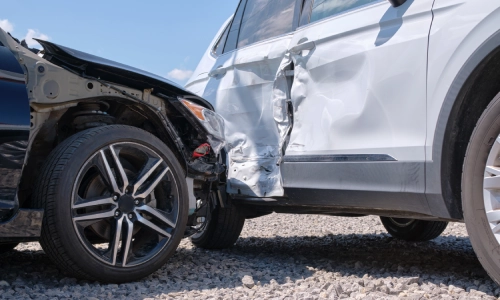
Car accidents are both common and complex events that can easily derail the lives of the unprepared.
If you’re looking for guidance in the aftermath of a car accident in California, look no further. Singh Ahluwalia Attorneys at Law has the resources you need to get through this troubled time.
In this comprehensive guide to California car accident claims, we’ll give you all the information you need to prepare for your pursuit of compensation after a crash. From the bare basics of California car accident law to the right course of action after a traffic collision, we’re here to share the information you need to bring you peace of mind.
Understanding Car Accident Law in California
California’s legal landscape for car accidents is shaped by specific laws and doctrines that significantly affect how injury claims are filed, valued, and resolved. From the concept of shared fault to the types of compensation available to victims, understanding these foundational principles is the first crucial step in navigating a successful car accident and injury claim in the Golden State.
Pure Comparative Negligence in California
California follows a pure comparative negligence system, which means that if you are partially liable for a car accident, the amount you are eligible to claim will be reduced by the degree of fault you share. This contrasts with contributory negligence, which prevents compensation if any fault is shared at all.
Say, for example, you were in a rear-end accident when overtaking on the PCH. You suffer a mild concussion and some whiplash, and after an investigation, it’s found that you’re 20% at fault.
A reasonable settlement range for this would be around $10,000 to $12,000, depending on the documentation. But because you are 20% at fault, you will only be able to claim between $8,000 to $9,600 out of the full amount.
California Minimum Insurance Requirements
Because no one knows ahead of time that an accident is going to occur, the state of California mandates that all registered vehicles carry auto liability insurance that meets minimum limits. These limits are written shorthand as 30/60/15.
To describe these numbers in detail:
- $30,000 for bodily injury or death to one person in an accident.
- $60,000 for bodily injury or death to all persons in a single accident.
- $15,000 for property damage per accident.
It’s important to remember that these values compensate others (third parties) for harm they sustained in an accident that you are responsible for. You cannot file a claim for compensation against your own insurance policy, whether for your own vehicle or your medical costs.
Also note that minimum insurance requirements can increase or decrease over time. The current minimums were implemented one year ago, in 2025, when the state increased them from the previous levels of 15/30/5.
Drivers are required to carry proof of insurance while operating their vehicle, as well as to provide this insurance when requested by law enforcement. On the insurer’s side of things, companies must report insurance status to the Department of Motor Vehicles (DMV).
Additional Coverages
State minimums only apply to basic liability. California allows, and, indeed, sometimes even requires insurers to at least offer additional coverage types.
- Uninsured/Underinsured Motorist (UM/UIM) Coverage: This is a type of coverage that protects drivers in accidents involving either uninsured (UM) or underinsured (UIM) parties. While drivers are not required to carry UM/UIM coverage, insurers must still offer it.
- Collision and Comprehensive Coverage: This is a faultless coverage that pays to repair or replace damage to your own vehicle. Carrying this type of coverage gives you a guaranteed minimum sum regardless of who caused the accident, which comes in handy in situations such as single-vehicle crashes.
- Medical Payments Coverage: The coverage commonly referred to as MedPay pays for both medical and funeral expenses resulting from an accident, and, like collision and comprehensive coverage, is faultless. This is generally a non-deductible coverage, and is similar to personal injury protection plans, often paying before regular health insurance.
Alternatives to Buying an Insurance Policy
Most law-abiding vehicle owners will opt to satisfy the state’s insurance requirement with a standard, minimum-coverage policy. However, California does allow some alternatives for people who cannot get insured.
These alternatives often come with a higher cost or require a significant net worth.
- A minimum cash deposit of $75,000 with the DMV
- A DMV-issued self-insurance certificate
- A minimum $75,000 surety bond from a California-licensed insurer.
Available Damages After a California Car Accident
Compensation an accident victim is entitled to typically falls under one of three general categories from the at-fault party. These categories: economic, non-economic, and punitive, are divided according to their purpose.
Economic Damages
Economic damages encompass any objectively verifiable losses tied to the accident. That is, anything that has papers and receipts to prove that they were incurred.
The most common forms of economic damages encountered in car accidents include:
- Medical Expenses: These are the direct expenses tied to your injury and its treatment. Medical procedures, scans, doctors’ bills, or anything of a similar nature can be counted as medical expenses.
- Lost Wages: Lost wages as damages compensate for the income a victim loses due to being away from work. It also covers things such as reductions in hours during recovery.
- Loss of Earning Capacity: Whereas lost wages serve as compensation for the time spent away from work. This form of economic damage compensates you for any reduced ability to earn money due to your injuries (e.g., an athlete who can no longer compete at their previous peak, or a contractor who can no longer work the same hours).
- Property Damage: Physical or digital property lost in an accident may be covered, depending on the coverage of the liable party. Property damage is typically lower compared to bodily injury coverage, but still serves to ease the financial impact on victims.
- Miscellaneous Expenses: Some policies may cover goods and services that a victim otherwise would not have incurred had the accident not happened. Things like car rentals, wheelchairs, home modifications and services, and assistive devices all fall under this subcategory of out-of-pocket expenses.
Non-Economic Damages
Non-economic damages are losses that don’t have objective monetary value, but are deemed worthy of compensation, regardless. These are also called human damages, as they commonly relate to the harm experienced by an accident victim rather than their material harm.
- Pain and Suffering: The broadest type of non-economic damages, pain and suffering account for the physical discomfort an accident victim goes through, be it caused by the accident itself or as part of the recovery process.
- Emotional Distress: Anxiety, depression, and other mental struggles are not uncommon after a serious car accident.
- Disfigurement or Physical Impairment: These range from simple scarring to tragic permanent disabilities.
- Loss of Enjoyment of Life: If an injury leads to a victim’s inability to participate in activities they once enjoyed, the subjective value of that enjoyment can be included as damages.
- Loss of Consortium: Negative effects on one’s relationship to their spouse or domestic partner can be accounted for. Loss of consortium covers social, emotional, and intimate damage in this regard.
The state of California does not prescribe a specific method of calculating non-economic damages, nor does the state place caps or impose limits on the amount of non-economic damages that a plaintiff may pursue. Instead, it simply instructs jurors (under CACI no. 3905A) to use their own judgment to determine a reasonable amount.
Generally speaking, jurors consider factors such as the nature of the injury, the extent of the injury, and the impact it causes on a person’s life. That said, there are at least two de facto standards of determining the value of non-economic damages: the multiplier method and the per diem method.
- Multiplier Method: Under this method, a plaintiff’s economic damages are multiplied by a factor, usually between 1.5 and 5. If, for example, a person is eligible for $30,000 in economic damages, and a multiplier is argued to be 3 based on the impact of the injuries, then they may be awarded up to $90,000 in non-economic damages.
- Per Diem Method: Per diem translates to “per day,” and is named as such because it assigns a dollar value for the plaintiff’s suffering, then multiplies it by the number of days they are expected to suffer. Physician, psychologist, or other similar testimony is typically used to support the argument for the amount.
| Category | Multiplier Method | Per Diem Method |
| Basic concept | Non-economic damages are calculated by multiplying economic damages by a chosen factor. | Non-economic damages are calculated by assigning a daily dollar amount to suffering and multiplying it by the duration of suffering. |
| Starting point | Total economic damages (medical bills, lost wages, etc.). | A proposed daily value for pain and suffering. |
| Typical range/value | Multiplier usually ranges from 1.5 to 5, depending on injury severity and impact. | Daily rate varies widely and is argued based on circumstances and testimony. |
| Strengths | Simple, intuitive, and tied to objective losses. | Emphasizes the human experience and passage of time. |
| Weaknesses | May understate suffering when economic damages are low. | Can appear arbitrary or inflated if not well supported. |
Courts do not formally endorse either method, and the specific one used is often determined during the negotiation phase of a claim.
Punitive Damages
Punitive damages are unique among the three main categories in that they are not primarily intended as compensation. They are instead, as per the name, intended to punish egregious misconduct and discourage it from happening in the future.
Punitive damages require a higher standard of proof than economic or even non-economic damages. Where the former only needs that evidence is more likely than not that harm occurred, the latter requires clear and convincing proof, and plaintiffs have to show the court that the defendant’s actions were indeed malicious or grossly negligent.
California does not have what is called a split-recovery statute, which means punitive damages are not split between the victim and the court. However, punitive damages are taxable under both federal and California law, so while not a statutory allocation of the award, the state can still receive money indirectly.
How Long Do I Have to File a Car Accident Claim in California?
Car accidents fall under personal injury law; In fact, accidents on the road make up the majority of personal injury claims in California. This means the time limits for filing a car accident claim in California follow the state’s two-year personal injury statute of limitations.
There are, however, some situations that affect your deadline.
- Property Damage: If you have not been injured and only need to file a claim for lost or damaged property, you have up to three years to file a claim.
- Government Entities: If a government entity is involved in an accident (usually, whoever is in charge of the roads on which the accident occurred), claims have to be filed within six months.
- Minority or Incapacity: If the plaintiff is under 18 or legally incapacitated (e.g., due to mental disability), the statute is tolled until the disability ends. For example, a child’s claim begins when they turn 18, giving them the full time allowed by law to file.
- Out-of-State or Fugitive Defendants: If the defendant is outside California or conceals their whereabouts to avoid service, the statute is tolled until they return or are otherwise reachable.
Other conditions exist, and consulting a lawyer on how much time you have is generally a good idea if you are unsure about which deadline applies.
Common Types of Car Accidents in California
California has some of the country’s busiest routes, with vehicles traveling an estimated 300 billion miles on its roads each year (317.7 billion miles in 2023). Even discounting the influx of visitors and tourists during peak seasons, California’s roads serve 35.98 million vehicles registered to 27.95 million licensed drivers.
Just from the sheer volume of traffic, accidents will occur. Understanding which of these accidents are the most common, as well as how they occur, helps drivers stay vigilant and avoid them altogether.
Rear-End Collisions
Rear-enders are the most common form of vehicular accident in California, and in the entire country, in fact. Most of the time, this happens when a vehicle is tailgating, and the leading driver comes to a sudden stop.
Rear-enders can also happen in parking lots when a driver is distracted and doesn’t notice how close they are to a parked car behind them.
Thankfully, these accidents typically result in milder injuries, especially since they occur at slower speeds. However, even mild injuries can worsen if not addressed, so you may still be interested in filing a claim.
Side Impacts
Side impacts, also called T-bones, are so called because of the way one vehicle collides with the side of another. These most commonly occur at intersections when cars fail to yield the right of way or attempt to beat red lights.
The danger of side impacts lies in how the sides of vehicles offer much less protection than the front or rear, leading to a higher risk of severe injuries in the struck vehicle.
Head-on Collisions
Head-to-head collisions of two vehicles are some of the rarer events on the road, and are usually associated with illegal actions such as drunk driving, distracted driving, or improper turns. They have a higher chance of occurring at speed and, as such, lead to more catastrophic injuries.
Sideswipes
Sideswipes occur when two vehicles’ sides make contact with each other. This can happen through a multitude of different scenarios, such as overtaking on the highway or passing a parked car, for example.
Injuries in sideswipes tend to be less severe than other types of accidents, but they do have a risk of causing secondary accidents if drivers lose control of their vehicles.
Rollovers
Accidents where cars roll over are rare; they’re more common among larger vehicles like trucks or buses, which have their center of gravity off the road. They also happen to be some of the most extreme accidents with the greatest potential for harm.
Rollovers are particularly dangerous on highways, as vehicles can easily end up upside down in other lanes, leading to chain reactions. Other times, they may end up with the car rolling off the road entirely and into terrain or private property.
Commercial Vehicle Accidents in California
Accidents involving commercial vehicles often introduce additional layers of complexity compared to standard passenger car collisions. These cases may involve multiple insurance policies, corporate liability, federal and state regulations, and questions about whether the driver was acting within the scope of employment at the time of the crash.
Rideshare Accidents
Rideshare services like Uber and Lyft have become a staple of California transportation, but accidents involving these vehicles raise unique insurance questions. The coverage available depends heavily on what the driver was doing at the moment of the crash.
Rideshare companies divide driver activity into distinct periods:
- Offline or App Off: The driver’s personal auto insurance applies exclusively. The rideshare company provides no coverage.
- App On, Waiting for a Ride Request: The rideshare company provides limited liability coverage, typically lower than during an active trip.
- En Route to Pick Up a Passenger or During a Trip: The rideshare company’s commercial policy applies, which generally includes $1 million in liability coverage.
If you were a passenger injured during a ride, you would typically file a claim against the rideshare company’s commercial policy. If you were struck by a rideshare driver while in another vehicle or as a pedestrian, determining which policy applies requires establishing exactly what phase the driver was in at the time.
California law requires rideshare companies to maintain these tiered insurance structures, but navigating overlapping policies and coverage disputes can be challenging without legal guidance.
Truck and Bus Accidents
Collisions with large commercial trucks, buses, and other heavy vehicles tend to result in more severe injuries simply due to the size and weight disparity involved. A fully loaded semi-truck can weigh 80,000 pounds or more, compared to roughly 4,000 pounds for an average passenger car.
Beyond the increased severity, these cases often involve additional liable parties. Depending on the circumstances, you may have claims against:
- The driver
- The trucking or bus company (as the employer)
- The vehicle owner, if different from the operator
- Cargo loaders, if improperly secured cargo contributed to the accident
- Maintenance providers, if mechanical failure played a role
Commercial trucking is also subject to federal regulations administered by the Federal Motor Carrier Safety Administration (FMCSA). These rules govern hours of service, vehicle maintenance, driver qualifications, and cargo securement, and violations of these regulations can serve as strong evidence of negligence.
Commercial vehicle operators are required to carry substantially higher insurance minimums than private drivers. Depending on the type of cargo and vehicle, federal minimums range from $300,000 to $5 million, which means more coverage may be available to compensate for serious injuries, but also means insurers tend to defend these claims aggressively.
What Should I Do After a Car Accident?
Now that we understand the basics of car accident law in California, we get to the question: what do you do when you find yourself in an accident?
We’ve already mentioned that California is governed by pure comparative negligence and explained how it works. Knowing what we know, it makes sense then that in order to minimize losses, an insurance provider will likely argue for as much fault in your direction as possible.
If you want to maximize the amount of recovery you can get after an accident, you need to recognize that the immediate steps you take can affect every aspect of your claim. The specific order of measures will vary based on the scenario, but generally speaking this is how things should be handled.
Step 1: Secure the Scene
Before anything else, you need to be sure that you, your passengers, and anyone outside your vehicle are safe. Generally speaking, you want to keep to that order.
Here’s how you do that.
Address Any Injuries
As soon as the initial shock wears off, calm and collect yourself, and then check yourself for any injuries. You may not be able to observe anything wrong right off the bat, but you should at least identify any obvious signs of harm.
Once you are certain of the extent of any immediate injuries, you can go ahead and check on other people in the vehicle. If you can access and/or provide first aid, do so, but also, do keep in mind that you might not necessarily be able to do anything about visible injuries, depending on their severity.
If anyone is hurt, unconscious, or trapped, note their position, but do not attempt to move them. The only exception to this is if you are either properly trained or if there is an immediate threat to their life (fire, submersion, etc.).
This is less about the misconception that you risk liability by potentially worsening their situation (California’s Good Samaritan law protects people from liability for trying to provide emergency aid) and more about your personal safety.
Assess Your Surroundings
Look around inside the vehicle, then do the same to the area surrounding your vehicle. Ideally, you want to get a good assessment of the situation from your seat before attempting to move.
Are there any hazards? Gas leaks, smoke, exposed wires, shards of glass, and twisted metal can all lead to further harm, so you want to keep an eye on those.
Move Away From Danger
Once you’ve determined the safest place to be, you want to make sure you and anyone else in danger make it there. This means:
- Generally, you want to stay in your car with your seatbelt fastened. Leaving the vehicle can increase your odds of injury and death compared to staying secure.
- If your vehicle was not disabled in the crash or can otherwise be safely moved, get it out of the way of traffic. If not, turn on your blinkers and set up traffic cones or early warning devices to ward off other drivers.
- If, however, there is a fuel leak, abandon your vehicle and create distance. Quickly set up your early warning devices from a safer position, and only if you can do so without exposing yourself to danger.
Call 911
California requires you to call the police after an accident, except for very minor encounters with minimal damage. Still, regardless of how minor the accident is, you probably want police at the scene anyway.
Call 911 and calmly inform the dispatcher of the situation, and, unless directed to hang up, stay on the line. A constant line of communication will provide dispatchers with information live as the situation develops; information that they can use to aid you before emergency services arrive.
When the police do arrive, speak with them and get the name and badge number of the responding officer. This will come in handy later on for the later steps, notably when filing a police report or when a dispute arises during an insurance claim.
If 911 also dispatched an ambulance to the scene, get medical attention immediately, even if you feel fine. You can get more treatment later on, but preliminary measures will prevent most injuries from getting worse.
Stay at the Scene
With the exception of medical or safety emergencies pertaining to you or other people involved, under no circumstances should you leave the scene. At worst, this is criminal behavior and can lead to a hit-and-run charge against you.
This is especially true if you leave before the police arrive. To that end, if you have reason to rush, consider other options before leaving:
- Wait for responders to arrive and notify before leaving.
- Request a bystander or witness to inform authorities of your presence and situation.
- Move your vehicle a short distance away without necessarily leaving the scene.
If you do have reason to leave, you still have the responsibility to report the accident to the DMV within 10 days.
Step 2: Gather Information
With the police on scene, you have the opportunity to gather information from other people.
Speak With the Other Driver
You and any drivers involved in the accident will need to exchange insurance information with one another. That means:
- Their name and contact details.
- Their insurance provider.
- Their insurance policy number.
You will also want to get the specific details of their vehicles: plate number, make, and model. The purpose is twofold: first, to provide additional documentation to get a clear picture of the accident, and second, to help identify the other parties in the event they leave the scene or provide false information.
One important thing to remember is not to give out more information than necessary. Give them the same information you ask for, and do not volunteer additional items like your driver’s license.
Certainly, do not offer an apology either, as this can later be misconstrued as admitting fault. Even if you do think it is at that moment, car accidents tend to be the sum of multiple factors, and in the chaos, you might not have the whole picture.
Speak With Witnesses
Getting a third-party view on things is usually when you might learn that you are less responsible for the event than you initially thought. Independent witnesses can help when settling disputes later on.
If anyone was around to witness the accident, talk with them to get their perspective on what happened. If they’re willing to provide their own contact information, you may ask them for it.
Do not try to shape their account, however, especially not in the presence of other drivers (or worse for you, the police).
Document Evidence
Gather photo and video evidence as soon as you can. If you don’t have a phone or a camera, you will usually be able to request bystanders or other drivers for any photos and recordings they might have taken, but don’t necessarily count on it.
Important things to record are:
- Damage to the vehicles.
- Visible injuries to drivers, passengers, and pedestrians.
- Position of the vehicles (if possible, before they are moved).
- Road and weather conditions.
- Traffic signals
This is not a full list, and any number of unexpected factors may be involved in an accident. We’ll delve more into that later, but for now, remember that small details, such as whether an airbag failed to deploy, might open up more avenues for compensation (product liability cases), so keep an eye out for anything that might help.
Step 3: Filing Your Claim
Once the situation has passed, you will have to contact your insurance provider to inform them of the accident. Provide them with details of the crash together with the other drivers’ information so they can get the process started, but do not give more information than necessary.
The same rules apply as when talking with the police. Be objective and give only factual details, and avoid oversharing.
Contact a Lawyer
The first thing you should do after contacting your insurer is to reach out to a California personal injury lawyer. Statistics show that working with a lawyer not only increases the amount you stand to gain from a claim but also the odds you even successfully make a claim in the first place.
Personal injury lawyers offer free consultations where you have the opportunity to learn about your case and how best to handle it. If you and your lawyer come to an agreement that working together is the best way forward, they will operate on contingency, which means you will only owe them money if you win.
Most importantly, working together with a lawyer means you have someone who can handle the stresses and complexities of the legal process in your stead. You get to focus on your recovery plan and getting your life back together, which is a challenge in and of itself after a serious accident.
Track Your Damages
With the claims process underway, you can now turn your attention back to your losses—more specifically, addressing them. Start by:
- Getting treatment for your injuries.
- Getting damage to your car repaired.
- Securing assistive services.
You will have to keep track of any expenses you incur related to your injuries and recovery plan.
Items beyond your expenses, such as lost wages or non-economic damages, should also be accounted for.
Whether or not they can and will be included among your damages will be determined later with your lawyer and insurer, but it is generally better to consider as many of your losses as possible than to miss out on potential compensation.
Meet With the Insurer
Eventually, the insurance company will try to contact you with an offer. They may explain to you how and why they arrived at this value, but you should almost never accept it, even if it might appear to be a fair amount.
And with that, you’ve gotten past the immediate aftermath of a car accident. Next up, we’ll take a look at the longer stretch of the journey, the car accident legal process.
California Car Accident Claim and Legal Process
Car accident cases are as varied and dynamic as the accidents themselves. Most will resolve at the negotiation table, some will need to see a courtroom, but just about all of them will follow a somewhat predictable legal path.
Understanding the basics of the process from investigation to settlement can teach a claimant a lot about how to avoid costly mistakes.
Investigation and Case Evaluation
The first thing to do when starting your claim is to gather and analyze evidence. This is an overlap with the immediate steps after a car accident, sure, but it is usually more formal once you involve your attorney.
This is because a lawyer is actually trained to put evidence together. They will review police reports, medical records, and other physical evidence, and then compare them against your policy limits and details.
Sending a Demand Letter
You or your attorney will have to draft a demand letter to the insurer. This document should outline things like how the accident occurred or why the other party is legally responsible, with a detailed breakdown of your findings in the investigation.
When the insurer receives this letter, they will usually respond with a counteroffer. Unfortunately, this first offer is often lower than the claim’s actual value, so be prepared to engage in negotiations.
Negotiations
Contrary to what might be expected, negotiations do not usually resolve in one sitting. It is very common for parties to go back and forth several times while they discuss and dispute fault percentages.
That said, most claims do end at the negotiation table. Settlements largely avoid the incredibly high cost of time, money, and energy associated with trials.
Filing a Lawsuit
If settlement negotiations fail or if the statute of limitations is approaching, your attorney may file a personal injury lawsuit. Filing a lawsuit does not mean the case will go to trial; it simply preserves your right to pursue compensation through the court system.
The lawsuit formally alleges:
- Negligence or other wrongful conduct
- The damages you suffered
- The relief being sought
Once the lawsuit is filed, the defendant (or their insurer) must respond, typically by denying liability or disputing damages.
Discovery Phase
Discovery is the formal exchange of information between both sides. Discovery allows each side to evaluate the strength of the other’s case and often exposes weaknesses in the insurer’s defense. As a result, many cases that reach discovery still settle before trial.
Mediation and Pretrial Resolution
Before trial, courts often encourage or require alternative dispute resolution, such as mediation or settlement conferences. During mediation, a neutral third party facilitates negotiations, during which both sides present their arguments and evidence.
Settlement discussions occur in a structured environment. Mediation is non-binding, but it frequently results in a resolution, particularly when both sides have a clear understanding of the risks of proceeding to trial.
Trial
If no settlement is reached, the case proceeds to trial. At trial, a judge or jury determines who was at fault, how fault is apportioned, and the amount of damages owed.
Trials are resource-intensive and unpredictable. Even strong cases carry risk, which is why relatively few car accident claims ultimately go to a verdict.
Post-Trial and Collection
If the plaintiff prevails at trial, the court enters a judgment. The defendant or insurer must then pay the awarded amount, subject to any appeals.
In most cases, payment comes from insurance proceeds. If damages exceed policy limits, additional collection efforts may be required, depending on the defendant’s assets and legal circumstances.
What Evidence Do I Need for a Common Car Accident Claim in California?
Insurance companies and courts rely on concrete evidence to determine liability and calculate compensation. Collecting the right evidence promptly can significantly impact the outcome of your claim.
Police Reports
A police report is often considered one of the most reliable pieces of evidence. It might not always be the most objective proof (police officers can make mistakes), but it still documents the facts of the accident, including the date, time, and location, parties involved, and any accounts of witnesses, drivers, and passengers.
Even if the police do not issue citations, having an official report can support your version of events.
Crucially, police reports almost always contain the same information you typically need for a claim anyway, which is why securing your copy is so important. If you were incapacitated during the accident and come to later, acquiring a copy of the report can help you understand exactly what went on.
Photographs and Videos
Visual evidence can illustrate the accident more clearly than words. They also happen to be some of the most ubiquitous pieces of evidence today, in a world where almost everyone is expected to have a phone.
In the event bystanders were unable to capture the event on their phone, traffic and dashboard cameras can also provide what they saw as evidence in a claim.
Good photo and video proof should include details like:
- Vehicle damage from multiple angles
- Skid marks, debris, or roadway conditions
- Traffic signs, signals, and visibility conditions
- Injuries sustained by anyone involved
Witness Statements
Independent witnesses play a big role in supporting your version of events in an accident. Collecting their contact information and obtaining written or recorded statements can strengthen your case.
These statements should clearly convey the witness’s perspective of the accident, including specific observations of traffic conditions, vehicle movements, and the behavior of all parties involved. Accurate and detailed accounts from unbiased witnesses can provide objective corroboration, making it harder for conflicting claims to undermine your account.
Medical Records
You cannot pursue compensation for injuries if you were not injured, and detailed medical documentation is the primary means of proving that you indeed suffered harm. Your doctor should be able to provide you with a log of your hospital or clinic visits, as well as any diagnoses and treatments you had to undergo.
Doctors deal with personal injury cases all the time, and so you should be able to get an official statement from them connecting your injuries to the accident. Healthcare providers’ words don’t serve as definitive evidence on their own, but provide a strong backing to establish the severity and legitimacy of your claim.
Repair Estimates and Receipts
If you’ve lost or damaged personal belongings in the accident, you will need to tally the value of these items. For your car specifically, you may want to visit a repair shop to get their estimates to repair any damage.
If you opt to repair your car yourself, you will need to keep all receipts for parts and services accrued. Be sure to take photos of the vehicle from before and after the repairs as well.
Communication Records
One form of evidence that is often overlooked is also a kind that evolves as the claims process progresses. Save copies of all communications related to the accident, including emails or letters, text messages, or social media exchanges.
The viability of such records in insurance claims is exactly why you should also avoid making unnecessary exchanges and posts about the accident. If you can use information that other parties publicly put out, they can do the same to you.
Car Accident Claims FAQ
Do I have to go to court for a car accident claim in California?
No. Most California car accident claims resolve through insurance settlements without going to court. Litigation typically occurs only when fault is disputed, damages are significant, or the insurer refuses to make a reasonable offer.
Filing a lawsuit does not guarantee a trial; many cases still settle during litigation.
Can I still recover compensation if I was partially at fault?
Yes. California follows a pure comparative negligence system. You can recover damages even if you were mostly at fault, but your compensation is reduced by your percentage of responsibility.
For example, if you are 30% at fault, your recovery is reduced by 30%.
What if my injuries don’t show symptoms right away?
Delayed symptoms are common, especially with whiplash, concussions, and soft tissue injuries. You can still pursue a claim as long as you seek medical treatment and can link the injury to the accident.
Waiting too long to see a doctor can weaken your case.
Should I accept the insurance company’s first settlement offer?
Generally, no. Initial offers are often lower than the claim’s true value and may not account for future medical costs, ongoing pain, or lost earning capacity.
Once you accept a settlement, you usually give up the right to seek additional compensation later.
How much is my California car accident case worth?
The value depends on multiple factors, including:
- Severity of injuries
- Medical expenses (past and future)
- Lost income and earning capacity
- Pain and suffering
- Degree of fault
There is no standard payout amount. Each case is evaluated individually.
What if the at-fault driver doesn’t have insurance?
If the at-fault driver’s insurance coverage is insufficient to fully compensate you, there may be other options, including:
- Filing a claim under your underinsured motorist (UIM) coverage
- Pursuing claims against additional liable parties
- Exploring whether the at-fault driver has personal assets
An insurance limits issue does not automatically mean your claim is capped at the at-fault driver’s policy amount.
Work With Our California Car Accident Lawyers Today
Facing the aftermath of a car accident is challenging enough without navigating the complex legal system alone. If you or a loved one has been injured in a California collision, you deserve dedicated, experienced legal representation committed to maximizing your recovery.
Don’t let the insurance companies dictate your future. Take the first step toward the compensation you need and the peace of mind you deserve.
Contact Singh Ahluwalia Attorneys at Law today at (559) 878-4958 for a free, confidential case consultation. We work on a contingency-fee basis, meaning you pay nothing unless we win your case.
Contact us today to start your recovery journey.